We have an urgent need—and a unique opportunity—to profoundly transform the ways in which people and goods move around in the United States.
A collaborative analysis led by the Union of Concerned Scientists found that using existing technologies, and at modest cost, we can achieve a zero-carbon, equitable transportation system by 2050.
This transformation is made possible by phasing out petroleum and transitioning to low and zero-carbon fuels. This eliminates tailpipe emissions that endanger communities, and at the same time keeps our climate targets within reach. To get there, we need to rapidly electrify vehicle fleets; strengthen efficiency standards for both electric and internal-combustion engine vehicles; reduce emissions from the remaining liquid fuels in hard-to-decarbonize sectors such as aviation, shipping, and long distance road transportation; and enable communities to reduce or eliminate the need to drive.
Achieving these goals will require a suite of forward-thinking policies and regulations at all administrative levels that are implemented with meaningful community engagement.
Low-Carbon Pathways for Transportation
This is a condensed, online version of the report. For all figures, references, and the full text, please download the full whitepaper PDF.
The window of opportunity to limit the worst impacts of climate change is quickly closing, and as a major consumer of global energy and currently the world’s second-largest emitter of global warming gases, the United States bears a large share of global responsibility in reducing current emissions. Transportation is the biggest source of global warming pollution at 29 percent of the country’s emissions, as well as a major source of toxic air pollution that disproportionately harms overburdened and underserved communities. Our transportation system is highly inequitable, reflecting decades of erroneous and biased decisions at all levels of government.
Analysis from the Union of Concerned Scientists (UCS) shows it is possible to dramatically transform our transportation system using existing technology. In collaboration with an advisory committee and consulting firm Evolved Energy Research, we modeled a profound transformation with fundamental changes in how the energy used for moving people and goods is both produced and consumed. Our results show we can build a fairer system not based on burning gasoline and diesel that reduces the harms we see today. This transition calls for four main strategies:
- Rapid vehicle electrification, including the build-out of an extensive charging infrastructure to support the growing electric fleet, and rapid transition of the power grid to renewable energy
- Strengthened vehicle efficiency for both electric vehicles and vehicles with internal combustion engines
- Reduction of emissions associated with the remaining liquid fuel in hard-to-decarbonize sectors, such as aviation, shipping, and some heavy-duty on-road transportation
- Societal and behavioral shifts that result in reduced driving and more active transportation, such as walking and biking; expanded and integrated mobility; and improved public transit
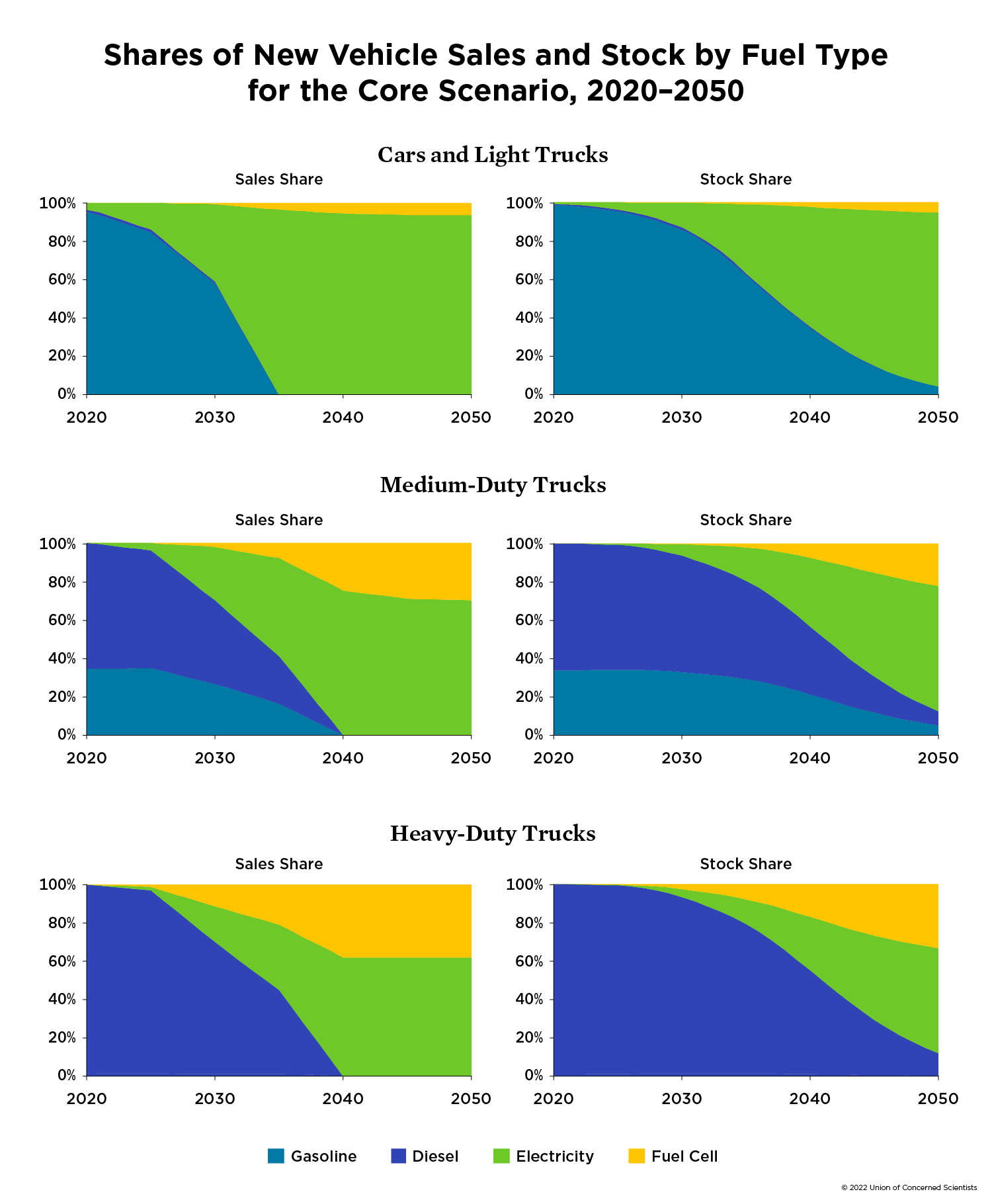
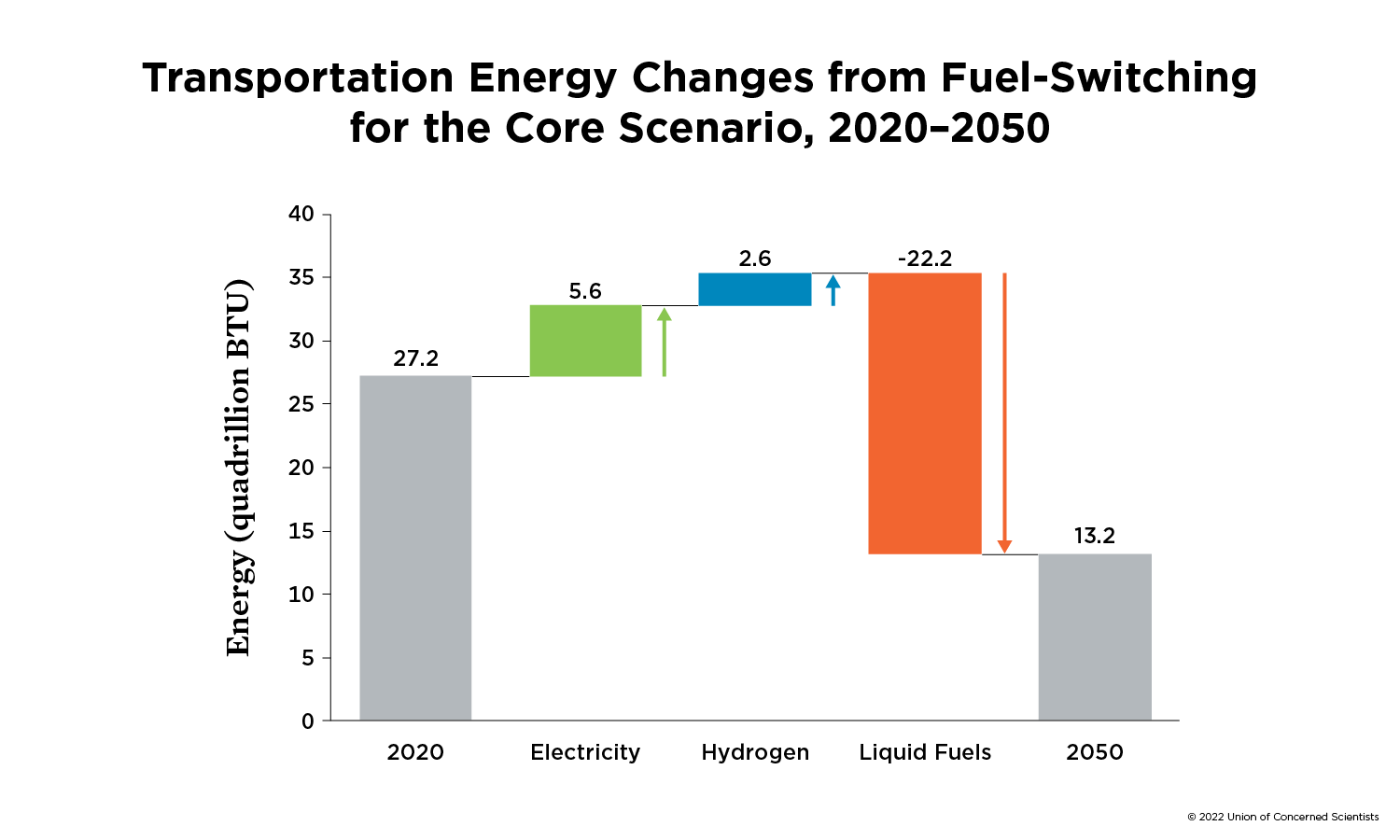
In our study, petroleum is largely phased out as the primary source of transportation fuel by midcentury. Transportation has been based primarily on petroleum for decades, but challenges associated with climate change, air quality and public health, environmental impacts, price volatility, and geopolitics have motivated the need to gradually discontinue the use of petroleum wherever possible and replace it with cleaner alternatives. In our results, petroleum is replaced by renewable electricity as the primary source of transportation energy. In our Core scenario, we show that if all sales of passenger cars and light trucks are electric by 2035, all sales of medium- and heavy-duty trucks are electric by 2040 (see Figure 1), and vehicle efficiency is strengthened, we can cut the use of gasoline, diesel, and jet fuel by 59 percent in 2040 and by 84 percent in 2050 (see Figure 2) while transportation energy is cut by 50 to 60 percent relative to today (see Figure 3).
The transportation sector is close to being fully decarbonized by midcentury, with a 98 percent emissions reduction from 2020 to 2050 in the Core scenario. The bulk of these emissions reductions are achieved through the rapid electrification of cars, trucks, and buses. Electricity is quickly proving superior to gasoline and diesel largely because of the efficiency of electric-drive engines compared to internal combustion engines and because manufacturing and operating an electric vehicle (EV) produces significantly lower global warming emissions compared to the average new gasoline vehicle everywhere in the United States (Reichmuth, Dunn, and Anair 2022). Furthermore, EVs have no tailpipe emissions and therefore have a significant impact on reducing local air pollution, particularly in frontline communities that have been disproportionally affected by toxic air pollutants emitted by burning gasoline and diesel (Pinto de Moura and Reichmuth 2019; Reichmuth 2019). Electrolytic green hydrogen for fuel cells takes on an increasingly important role over time to fill the gap created by vehicles not well suited for electrification, such as long-distance trucks.
The remaining emissions in 2050 originate from the small volume of liquid fuels still needed at that time (see Figure 2). A declining share of the fleet will still be running on internal combustion engines through 2040 and beyond, as vehicles stay on the road for around 15 years. In 2050, one in five heavy trucks on the road will still depend on diesel, as heavy-duty electrification progresses more slowly. However, this remaining liquid fuel primarily powers hard-to-decarbonize sectors, such as aviation and shipping, and some heavy-duty on-road transportation. Sustainable biofuels, synthetic fuels, and low- and zero-emissions hydrogen are the best options to mitigate the remaining emissions in the transportation sector.
The pathways from our findings are economically viable, with modest net costs relative to the size of the economy. All forecast net energy needs in the economy are met at a net cost of less than 1 percent of GDP. The annual net cost under the Core scenario is $45 billion by 2030 and $155 billion by 2050. At midcentury, significant investments of $830 billion are needed in the power grid, in the deployment of renewables, and for zero-carbon fuels, but these investments are mostly offset by $675 billion in savings from reduced fossil fuel use. Moreover, these costs are easily outweighed by the benefits of avoided climate change impacts and health impacts, as well as by other benefits of living in a more equitable society. Such estimates were beyond the scope of this study but have been the subject of many other studies (ALA 2022; Vahlsing and Yagan 2022). Novel technologies were not found to be necessary to meet the carbon reduction targets.
The energy model relies on a limited amount of carbon dioxide removal technologies to offset the remaining emissions in the economy and achieve carbon neutrality in 2050, primarily in the form of bioenergy carbon capture and storage and a small amount of direct air capture when the biomass supply is limited. The use of these technologies by the energy model reflects the current understanding that various forms of carbon capture and storage may be required to reach net-zero emissions (IPCC 2022), but these technologies are not free of substantial uncertainties and risks and are not aligned with the objective of replacing all fossil-based transportation fuel with cleaner alternatives as quickly as possible.
The significant growth of electricity demand, driven primarily by vehicle electrification, has important implications for the power grid. It is critical that the shift to electrification and fuel-cell technologies be coupled with a significant increase in renewable electricity generation primarily from wind and solar power. The share of electricity in the economy used for powering electric vehicles increases from less than 0.1 percent in 2020 to approximately 25 percent in 2050, while the share of zero-carbon sources grows from 38 percent of our electricity in 2020 to 97 percent in 2050. These achievements will require an unprecedented build-out of wind and solar capacity and related grid infrastructure.
Societal and behavioral changes are crucial aspects of a cleaner and more equitable transportation future. We developed an alternative Low Energy Demand scenario illustrating how it is possible to go beyond the technological pathways of electrification, efficiency, and clean fuels by reducing the demand for energy services. This scenario illustrates how the same emissions constraints and climate targets can be met with a less energy-intensive lifestyle and a consequent reduced level of technology and infrastructure investment. For instance, there would be reduced demand for EV batteries and charging infrastructure; reduced carbon capture and carbon dioxide pipeline infrastructure; and a more manageable rate of renewable deployment, electricity transmission, and storage build-out. The largest potential for emissions reduction comes from EVs powered by low-emissions electricity, as is also the case in the Core scenario. We achieve a 34 percent reduction relative to the Core scenario in electricity generation, a 30 percent reduction in hydrogen use, and an 8 percent reduction in liquid fuel use by 2050.
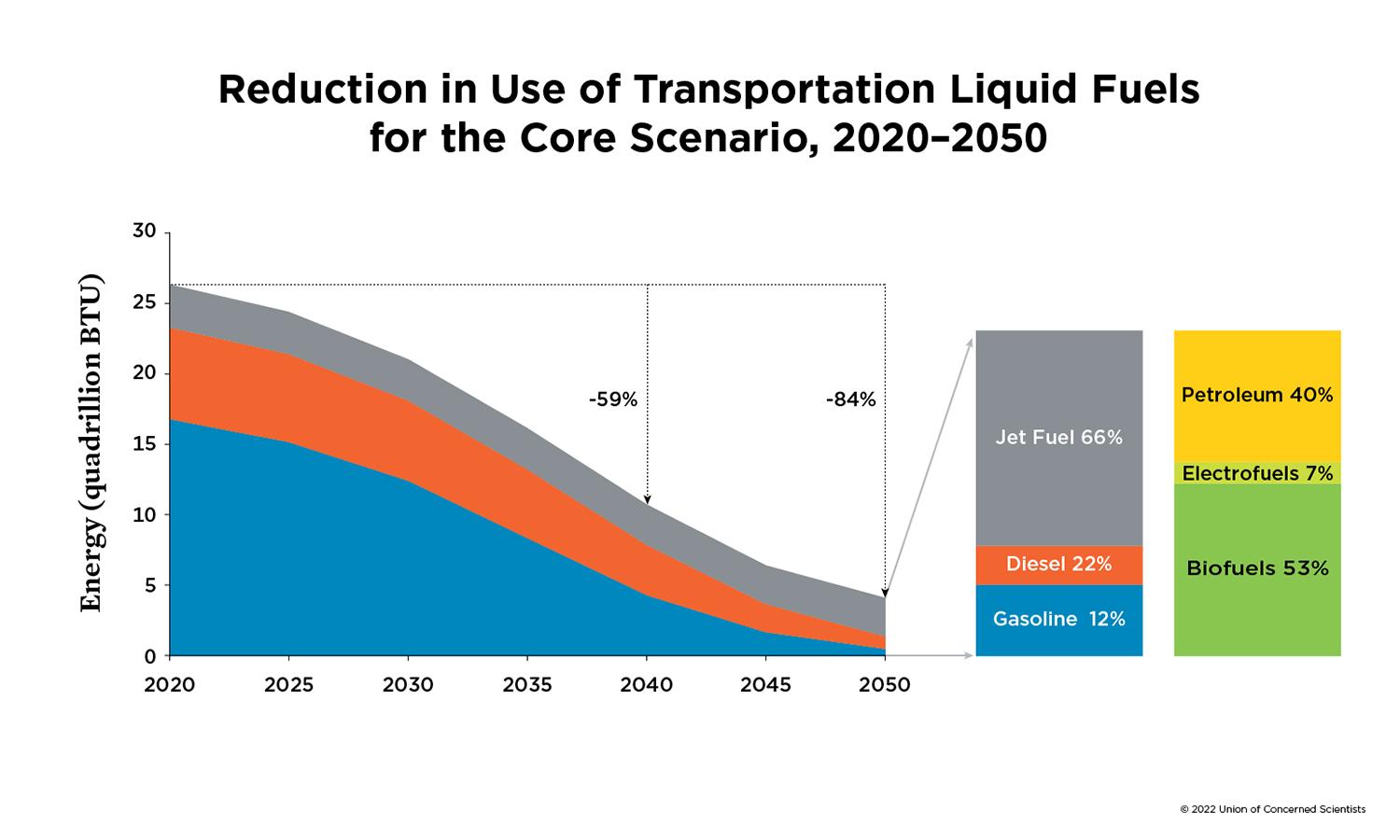
sources.
Note: The columns on the right show the shares of the types of liquid fuels used in 2050 (gasoline, diesel, and jet fuel) and how these fuels are produced (biofuels, synthetic fuels, and petroleum).
A suite of coordinated policies and regulations at all administrative levels is required to phase out petroleum and achieve a zero-carbon and equitable transportation system by 2050. Policies must be implemented with meaningful community engagement and equitable distribution of burdens and benefits, centering the needs of communities historically overburdened by transportation pollution. It is imperative for stakeholders— consumers, communities, labor, automakers, utilities, regulators, policymakers and leaders at all levels of government, and others— to have a voice in shaping policies and to understand the central role of policies in the following areas:
- electrification of light-, medium-, and heavy-duty vehicles, and the development of charging infrastructure and batteries;
- clean fuels standards that hold fuel producers accountable to steadily reduce the life-cycle emissions of transportation fuels;
- strengthening global warming emissions and fuel economy standards;
- deployment of renewable energy in the power grid and the potential for transportation-electricity sectoral coupling, such as flexible charging;
- supporting healthier, diverse ways of moving around that make mobility accessible to all, such as walking, biking, and using public transportation;
- reducing driving and understanding the impacts of personal vehicle use, freight, shipping, and aviation;
- deployment of carbon dioxide removal in circumstances where direct replacement of fossil fuel combustion is infeasible; and
- ensuring that risks to overburdened and underserved communities are mitigated, historical inequities are addressed, and any burdens associated with new technologies are shared equitably.
In conclusion, the study reiterates the urgency of the climate crisis and environmental injustices and shows that we can decarbonize our transportation system to near-zero carbon by midcentury with existing technology and at modest cost. But to achieve this goal we need transformative policies and investments. The pathways we examine provide guidance to stakeholders in face of the many trade-offs and uncertainties in this highly challenging transition. Assessing the alternative pathways is critical, for we have a unique opportunity to make lasting systemic changes in the energy and transportation systems. But of utmost importance is the fact that a 30-year transition to a clean transportation system has far-reaching implications, since the system deeply affects many aspects of society, going well beyond the energy system and the reduction of global warming emissions to encompass economic growth, increased and higher-quality employment, better land use, cleaner air and improved health, and the dramatic reduction of the current inequity and injustice firmly entrenched in our energy and transportation systems.
This is a condensed, online version of the report. For all figures, references, and the full text, please download the full whitepaper PDF.
In this report
New Vehicle Sales and Stock by Fuel Type for the Core Scenario
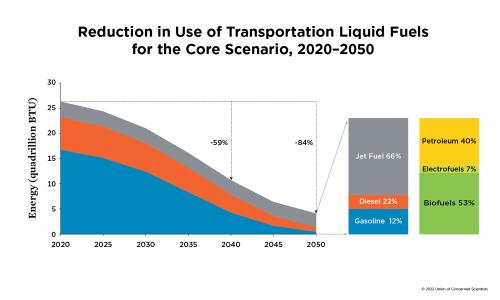
Reduction in Use of Transportation Liquid Fuels for the Core Scenario
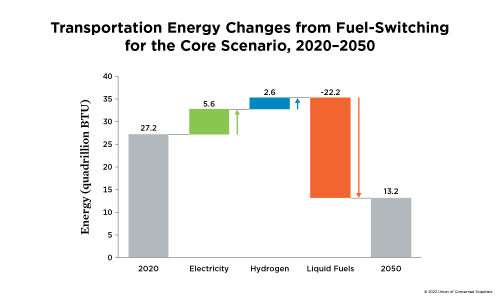
Transportation Energy Changes from Fuel-Switching for the Core Scenario, 2020–2050
Downloads
Citation
Pinto de Moura, Maria Cecilia. 2022. Low Carbon Pathway for Transportation: Ramping up vehicle electrification and phasing out petroleum. Cambridge, MA. Union of Concerned Scientists. https://www.ucsusa.org/resources/low-carbon-pathways-transportation
Related resources
State Electric Vehicle Benefits
All About EV Battery Recycling

Look For The Helpers – Part 2